
Don't Miss
- How Much Money Is Needed To Invest In Rental Property?
- Should A Real Estate Investor Get An Agent’s License?
- 5 Big Factors That Affect The Costs Of Renovating Your Home
- SIBOR Hike – What You Can Do With Your Current Loan
- 6 Basic Don’ts Of Real Estate Negotiation Tactics
- Will New Condo Relaunches Trigger The Great Property Sale We Have All Been Waiting For?
- 10 Proximity Amenities That Add Value To Real Estate
- How To Get Personal Loans More Easily With Good Credit
Periodic Rate
By Contributor on August 20, 2018
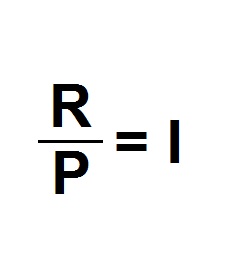
R/P = I
Where
R = Annual interest rate
You need to know:
What lenders hope you never learn about mortgages
P = Number of periods
I = Periodic rate
The periodic rate is used to calculate interest rate that has been charged on a loan over a specific period of time.
It is simply calculated by dividing the annual interest with the number of periods.
This rate can then be used to calculate monthly compounding interest on a loan, as well as daily.
For example, if the annual rate is 6% with a monthly period, the monthly periodic rate would be
0.06/12 = 0.005 or 0.5%
We can then use this to calculate the compounding interest
On a $100,000 compounding interest for 7 months would be
[easy-social-share buttons="facebook,twitter,google,linkedin" counters=0 style="icon" nospace="yes" sidebar="yes" sidebar_pos="left" hide_mobile="yes"]
[easy-social-share buttons="telegram,line,whatsapp,sms,viber" counters=0 style="icon" nospace="yes" only_mobile="yes" mobilebuttons="yes"]
(1 + 0.005)7 = 1.0355
Then, 1.0355 x $100,000 = $103,550
The dollar amount after 7 months would be $103,550.
 |
 |
 |
 |
Latest Singapore home loan rates |
Hidden items that bring up mortgage costs |
Hiring a competent agent |
How to burn more calories in the office |

0 comments